
Attic air sealing
Address air movement at the top of your home while vapor barrier work handles moisture at the bottom.
Learn more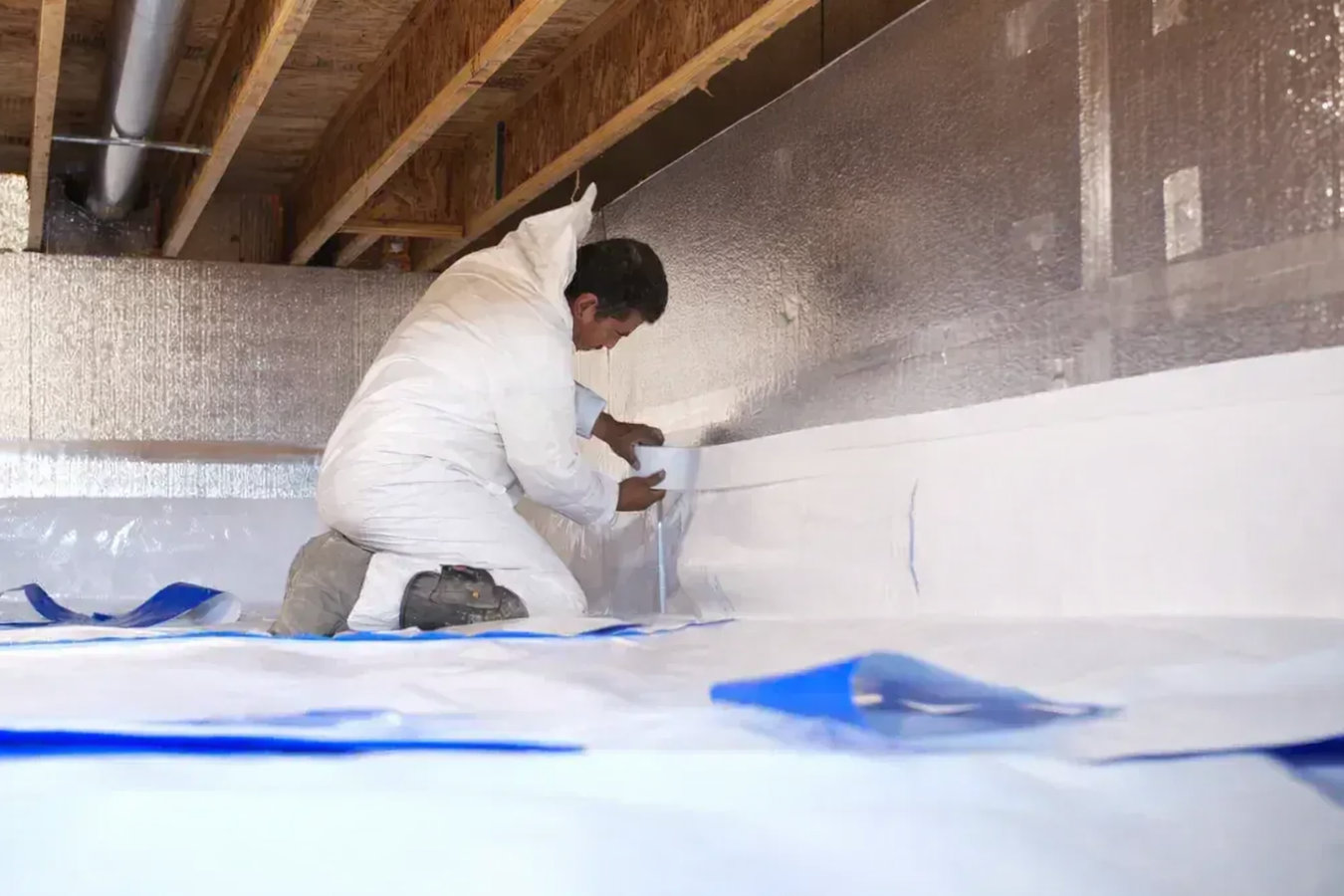
If your floors feel cold in winter or your home smells musty after rain, ground moisture is moving up through your crawl space. A properly installed vapor barrier stops it at the source.
Vapor barrier installation in Hollister covers the bare dirt floor of your crawl space with thick plastic sheeting, blocking ground moisture from rising into your floor framing and the air inside your home - most jobs are completed in one to two days for a typical single-family home.
Most homes in Hollister that benefit from this service were built in the 1950s through the 1980s, when crawl space moisture protection was either minimal or skipped entirely. Decades of wet winters have likely been sending moisture up through bare soil without anything blocking it. The crawl space is by far the most common installation location for existing homes on the Central Coast.
For homes where the crawl space itself also needs better thermal performance, pairing vapor barrier work with attic air sealing is a natural next step - addressing moisture and air movement together gives you a more complete home.
A damp, earthy odor inside your home - especially near the floors or in back rooms - is almost always moisture-related. In Hollister, this tends to peak in January and February when the rainy season is at its height. The smell can fade in summer, making it easy to push aside, but the moisture is still working on your framing even when you cannot smell it.
When moisture sits under your home long enough, it affects the wood framing and subfloor. You might notice floors that feel colder than they should in winter, or certain spots that feel slightly soft or springy underfoot. This is especially common in older Hollister homes where the crawl space has never had any moisture protection.
Water droplets forming on the inside of your windows or along the base of your walls during Hollister's wet season signal that moisture levels inside your home are too high. Some of that moisture is rising from an unprotected crawl space. A properly installed vapor barrier is one of the most direct ways to reduce this.
Termites and rodents are drawn to damp, dark crawl spaces - and Hollister's agricultural surroundings mean pest pressure here is higher than in many suburban areas. If you have had an exterminator out recently or noticed signs of activity near your foundation, a vapor barrier is one of the best follow-up steps. Pests are far less likely to settle in a dry, sealed crawl space.
We install durable polyethylene sheeting across the full floor of your crawl space - seams overlapped, taped, and edges secured to the foundation walls so moisture cannot sneak in at the sides. The quality of the installation is what determines how long the barrier actually works. A barrier with gaps, loose edges, or thin material will underperform within a few seasons, especially in Hollister's wet winters.
For homes that need a more comprehensive solution, we also offer crawl space vapor barrier work that includes assessment of the foundation perimeter and any seismic displacement from the Hollister area's active fault proximity. Each job starts with a written estimate you can review before committing to anything.
Suits homes with bare dirt crawl spaces and typical seasonal moisture from Hollister's wet winters. Covers the full ground surface with quality sheeting, sealed seams, and secured edges.
Suits homes with elevated humidity, persistent moisture levels, or crawl spaces used for storage. Uses thicker material and prepares the space for full encapsulation if needed in the future.
Suits older Hollister homes where original thin plastic has cracked, torn, or been displaced by seismic movement. We remove the old material, inspect the ground and walls, and install a proper long-term replacement.
Suits homes where ground moisture and poor floor warmth are both present. We install the vapor barrier first to address the moisture source, then add insulation above for a complete crawl space upgrade.
San Benito County gets most of its annual rainfall between November and March, and that wet season pushes moisture up through the soil under homes with no barrier. Hollister's clay-heavy soils absorb water slowly and hold it long after rain stops - the ground under a home here can stay damp well into spring. A significant portion of the city's housing stock dates from the 1950s through the 1980s, when crawl space moisture protection was often skipped entirely. Older neighborhoods near downtown and along San Benito Street commonly have bare dirt crawl spaces that have never been addressed.
Hollister's proximity to active fault lines adds another factor: even minor seismic activity can shift foundation walls and displace an older vapor barrier, creating new entry points for moisture. Homeowners we serve in nearby Morgan Hill and Salinas face similar seasonal moisture patterns, and fall - before the November rains arrive - is consistently the best time to get this work done.
We will ask a few basic questions about your home and what you have noticed. You do not need to know any technical details - just describe the symptoms. We reply within 1 business day and scheduling for most Hollister homeowners happens within a few days.
A contractor or estimator accesses your crawl space and looks at the actual conditions - size, existing barrier if any, moisture signs, and access difficulty. This visit usually takes 30 to 60 minutes and is offered at no charge. You will get a written estimate before any work is scheduled.
The crew works entirely in the crawl space. They clear any debris, lay the barrier sheets across the full ground surface, overlap and tape every seam, and seal the edges to the foundation walls. You do not need to be home or move anything inside the house.
Before leaving, we provide photos from inside the crawl space showing the finished installation, plus written documentation of the materials used. Ask for this before we go - and if a contractor resists, that is a clear warning sign worth taking seriously.
No obligation. Written estimate. We explain everything in plain language.
(831) 271-0020We are not a regional franchise sending a crew from two hours away. We work regularly across Hollister and San Benito County and understand what crawl spaces here actually look like - the clay soil, the seismic history, the older housing stock. That local knowledge changes how we assess and quote each job.
You will see the sheeting thickness, how seams will be handled, and the full cost in writing before any work is scheduled. We do not give a vague quote and adjust it once the crew is already under your house.
You cannot easily verify the finished work without going under the house yourself. We document every job with photos showing the barrier laid flat, seams taped, and edges secured to the walls - and we have those ready before we leave. You should not have to ask twice.
We follow the installation guidance published by the U.S. Department of Energy for crawl space moisture control - full coverage, sealed seams, and edges secured to the foundation. For background on what proper crawl space moisture management involves, see the DOE moisture control guidance - that is the standard we hold ourselves to on every Hollister job.
The combination of local knowledge, written estimates, and documented finished work is how we build trust with homeowners in Hollister. A contractor who cannot show you what they did is not a contractor you should pay for work you cannot see.
Address air movement at the top of your home while vapor barrier work handles moisture at the bottom.
Learn moreLearn more about the crawl space-specific vapor barrier approach and how it protects your floor framing.
Learn moreHollister's rainy season starts in November - get a free estimate now and protect your crawl space before moisture becomes a bigger problem.