Basement Insulation
Insulate your basement or foundation area to reduce heat loss at the base of your home and eliminate cold floors above.
Learn more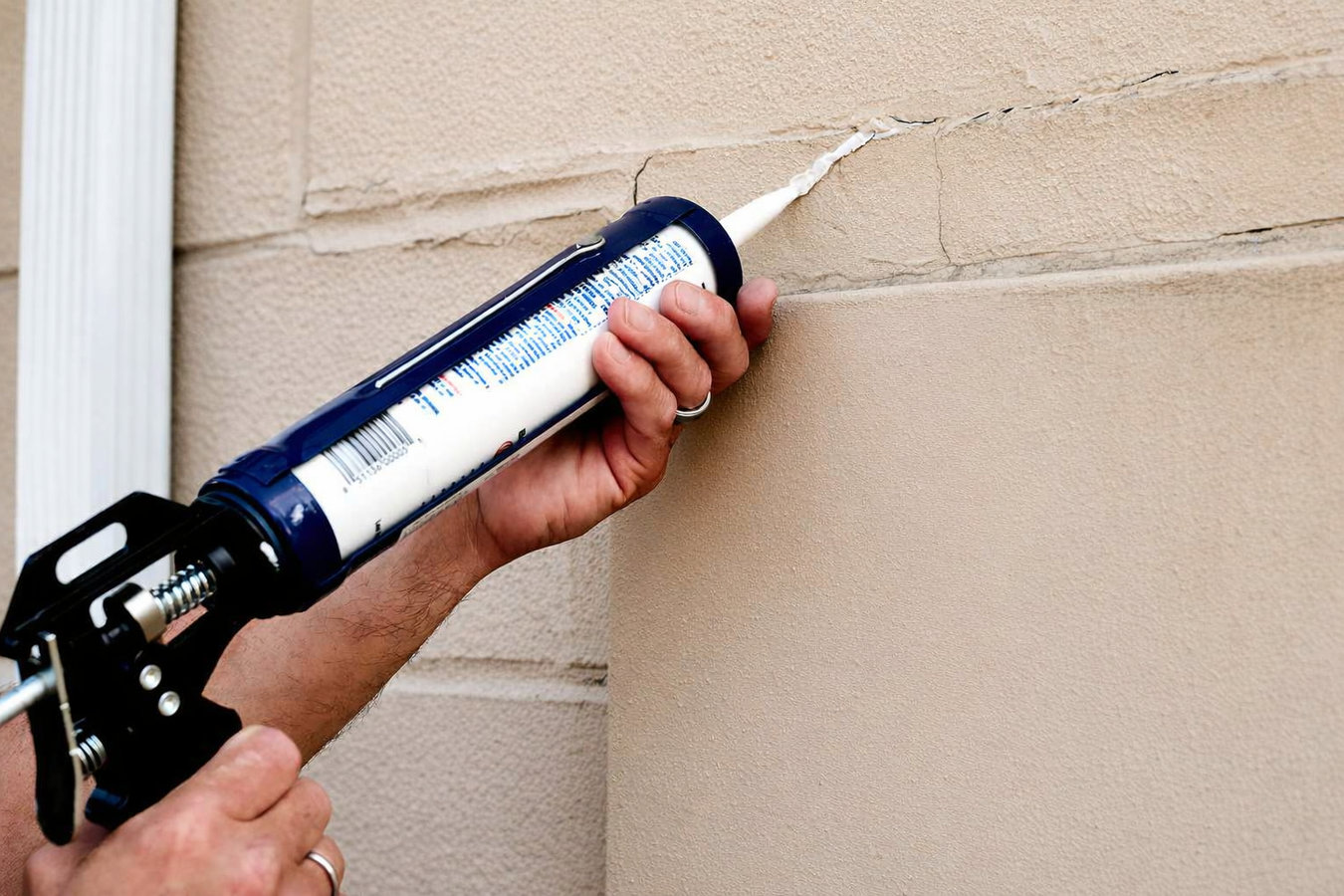
Gaps in your home's shell let hot air in, cool air out, and wildfire smoke through. Air sealing closes those gaps so your HVAC system can actually keep up.
Air sealing services in Hollister find and close every gap, crack, and opening in your home's shell - most residential jobs are completed in a single day with no need to vacate the home.
Hollister homes lose a significant amount of their heating and cooling energy through air leaks - not through walls or windows, but through gaps around pipes, wires, light fixtures, attic hatches, and wall joints. Those gaps let outdoor heat push in during summer, pull warm air out in winter, and funnel wildfire smoke indoors during fire season. Air sealing closes them. It is the step that makes attic air sealing and other insulation work actually perform at their rated efficiency - without it, adding more insulation is only part of the solution.
If your home was built before the mid-2000s, there is a very good chance it has more air leaks than you would expect. Homes of that era were not built with today's tight construction standards, and every year those gaps are open, they are costing you money on heating and cooling you never actually feel inside the house.
Hollister summers are genuinely hot, and if your cooling costs feel out of proportion to how much you are running the AC, air leaks are a likely cause. Hot outside air pushing through gaps forces your system to work harder than it should. If your bills have crept up year over year without a clear explanation, an air sealing assessment is worth scheduling before the next heat season.
If smoky outdoor air finds its way into your living room during a nearby fire event, that is a direct sign your home has significant air leaks. Smoke is very fine and travels through gaps too small to feel with your hand. This is a particularly relevant signal for Hollister homeowners given the fire activity in the surrounding hills in recent years.
If one bedroom is stuffy in summer or a hallway is drafty in winter no matter what you do with the thermostat, uneven air leaks are often the reason. Gaps in the attic or walls near those rooms let outside air in or conditioned air out, creating hot and cold spots your HVAC system cannot fully correct.
Hold your hand near an electrical outlet on an exterior wall on a windy day - if you feel air movement, that outlet is connected to a gap in your wall cavity that goes all the way to the outside. This is one of the most common and fixable air leaks in older Hollister homes built before modern construction standards.
We begin every air sealing job with a blower door test - a large fan mounted in your doorframe that depressurizes the house and makes every air leak detectable. This is not guesswork. The test gives us a precise picture of where your home is losing air and how much, so we can seal the gaps that actually matter rather than just the obvious ones. After the work is done, we run the test again so you can see the before-and-after numbers. If your home also needs basement insulation or other insulation work, we sequence the jobs correctly - seal first, then insulate - to make sure you get the full performance benefit from both.
Most of our air sealing work focuses on the attic floor, crawl space, and wall penetrations - the areas where the biggest leaks typically hide in Hollister's older housing stock. We use foam and caulk appropriate to each location. For homes where the attic is the primary problem, we coordinate with our attic air sealing service to give you a thorough treatment in the area that matters most. PG&E rebate eligibility is reviewed at the estimate stage - not after the job is done.
Best for homeowners who want to address all major leak points - attic, crawl space, and wall penetrations - in a single coordinated job.
Ideal for homes where most energy loss is happening at the attic floor, which is the most common culprit in Hollister's older single-story homes.
For homes on raised foundations where the rim joist and crawl space entry points are a significant source of air infiltration and seasonal drafts.
For homeowners planning a blown-in or batt insulation upgrade who want to confirm air sealing is done first so the insulation performs as expected.
Hollister sits in the San Benito Valley and experiences a Mediterranean climate - summers regularly reach the upper 90s, and winters can be cool and occasionally frosty. That means your HVAC system is working hard in both directions all year. Air sealing pays off faster here than in milder climates because you are recouping savings across two full seasons, not just one. Add in Hollister's proximity to wildfire-prone hills and the agricultural dust that comes with an inland valley location, and a leaky home is not just expensive to heat and cool - it is a meaningful air quality problem too. Homeowners in Gilroy face the same combination of inland heat and seasonal smoke and benefit from the same air sealing approach.
A significant portion of Hollister's residential neighborhoods were built in the 1960s through 1990s, before modern energy codes required tight construction. Homes of that era were built with little attention to air sealing - gaps around pipes, wires, and framing were simply left open. If your home was built before the mid-2000s, there is a very good chance it has more air leaks than you would expect. PG&E serves Hollister and offers rebates for qualifying air sealing improvements, and a federal energy efficiency tax credit may also apply. We serve homeowners across the region, including those in Watsonville where similar coastal-adjacent conditions create the same year-round air sealing case.
Reach out by phone or through the contact form and we will respond within one business day. We ask a few basic questions - your home's age, size, and what has been prompting your concern - so we arrive to the assessment prepared with the right equipment.
We walk your home and set up a blower door in your front doorway. The fan depressurizes the house and makes air leaks easy to locate. This test usually takes one to two hours and gives us a precise picture of where your home is losing air and how much.
After the assessment, you receive a written estimate explaining what we found, what we recommend sealing, and the total cost. We also tell you whether PG&E rebates or federal tax credits apply to your project - before you commit to anything.
The crew works through your home systematically using foam and caulk to close gaps in the attic, crawl space, and wall penetrations. Most homes are done in a single day. We run the blower door test again at the end so you can see the measurable improvement in real numbers.
Free blower door assessment. Written estimate. PG&E rebate review included at no charge.
(831) 271-0020We test your home before work begins and again after it is done. You get an actual number showing how much tighter your home is - not just a contractor's word that the work was done right. This is the standard a legitimate air sealing job should be held to.
We work locally across Hollister and the surrounding region, which means we know what kinds of gaps show up in 1970s San Benito County construction versus newer stucco homes on the east side of town. Local knowledge means fewer surprises on assessment day.
Not every contractor connects air sealing to smoke infiltration - we do. During the estimate, we explain exactly which areas of your home are most vulnerable to smoke infiltration and what sealing them involves. Hollister's proximity to fire-prone hills makes this a real concern, not a talking point.
The federal Inflation Reduction Act offers a tax credit worth up to 30% of qualifying air sealing and insulation project costs. Combined with PG&E rebates, the out-of-pocket cost for this work can be meaningfully lower than the sticker price. We review your eligibility at the estimate stage. For details on federal credits, see ENERGY STAR's federal tax credit guidance and the EPA's indoor air quality resources.
The before-and-after blower door test is what separates a real air sealing job from one where you just have to take the contractor's word for it. We do not skip that step - it is how we hold ourselves accountable and how you know you got what you paid for.
Insulate your basement or foundation area to reduce heat loss at the base of your home and eliminate cold floors above.
Learn moreTarget the attic floor specifically - the single most productive area for air sealing in most Hollister homes.
Learn moreGet a free blower door assessment and written estimate before the next heat season arrives and your cooling costs climb again.