
Wall Insulation
Extend thermal protection from your crawl space to the walls of your home for a more complete energy upgrade.
Learn more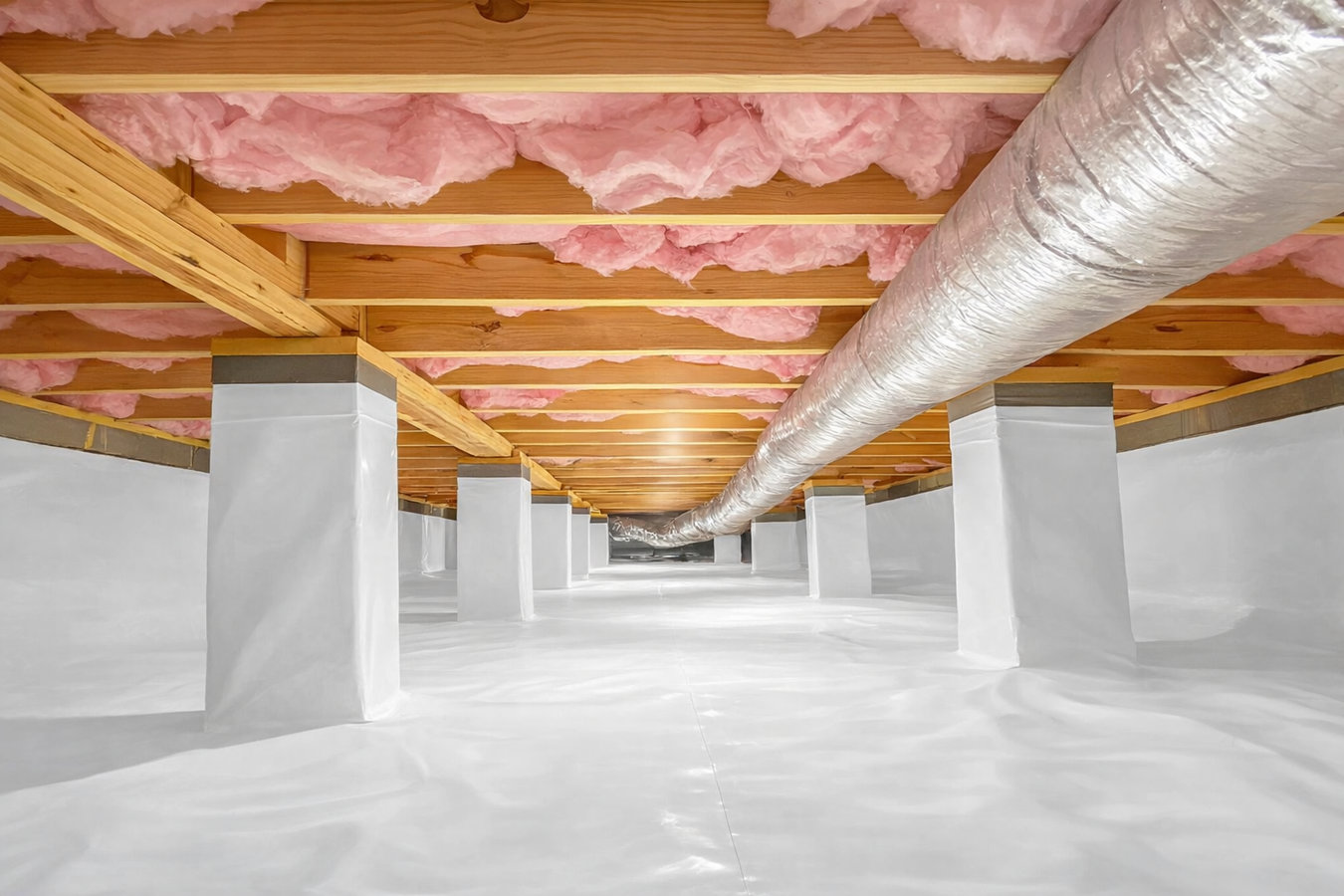
Cold floors, rising energy costs, and moisture creeping in from below are all signs your crawl space needs attention. We fix the problem at the source.
Crawl space insulation in Hollister keeps the buffer zone between your cold ground and your living areas working properly - most installations are complete in one day, and many homeowners notice warmer floors and lower bills within the first heating season.
The space under your home is doing more work than most homeowners realize. In winter it is the pathway that cold ground air uses to pull heat out of your floors. In summer it is where moisture builds up if the space is not properly sealed. If your home is one of the many in Hollister built between the 1960s and 1990s with a vented crawl space, there is a good chance it is not performing the way a properly insulated and sealed space would.
If the crawl space has old or damaged insulation that needs to come out first, our wall insulation and crawl space vapor barrier services complement this work and are often done together.
If you walk across your kitchen or living room on a January morning and the floor feels cold through your socks, heat is escaping downward through an uninsulated crawl space. Hollister's winter nights regularly drop into the upper 30s, and without a thermal barrier under your floors, that cold ground air works its way up all season long.
A damp, earthy smell coming from your floor vents is a sign that moisture is building up in the crawl space below. Hollister's wet winters create ideal conditions for this, especially in older homes with vented crawl spaces that pull in outside air. Left alone, that moisture can lead to mold growth on the wood framing under your home - a much more expensive problem to fix.
If your heating and cooling costs have been climbing but nothing obvious has changed, an uninsulated or deteriorating crawl space may be the reason. Insulation breaks down over time, especially if it has been exposed to moisture or disturbed by pests, and once it loses its effectiveness your HVAC system has to work much harder to compensate.
Many Hollister homes built from the 1960s through the 1980s have little or no crawl space insulation, or materials that have long since degraded. If you have owned the home for years and cannot recall any work being done under the house, there is a reasonable chance the insulation - if any exists - is no longer doing its job. A quick inspection will tell you exactly what you are working with.
Every crawl space job starts with a physical inspection - we go in, check for standing water, pest damage, existing insulation condition, and any gaps in the foundation walls. Nothing is priced until we have seen the space. Insulation is installed either between the floor joists above the crawl space or along the crawl space walls themselves, depending on whether your space is vented or sealed. For homes with vented foundations - the most common setup in older Hollister neighborhoods - we also discuss the option of converting to a sealed, conditioned crawl space, which performs better in the local climate.
Most jobs include a ground moisture barrier as part of the installation. Think of it as a raincoat for the floor of your crawl space - without it, even the best insulation can absorb dampness from the soil over time. We also pair this service with our crawl space vapor barrier installation when a more complete encapsulation is the right call, and with wall insulation when a whole-home thermal upgrade is the goal.
The standard approach for vented crawl spaces - insulation goes between the wooden beams above to block heat loss from below.
Part of a sealed crawl space conversion - blocks outside air and moisture from entering rather than trying to manage it after it gets in.
Best for homes with moisture concerns - pairs ground cover with insulation to address the root cause and the thermal problem at the same time.
Hollister sits in the San Benito Valley with a Mediterranean climate - warm, dry summers and cool, wet winters where January lows regularly dip into the upper 30s. That seasonal swing means your crawl space faces real moisture pressure in winter and heat stress in summer. The wet season brings concentrated rainfall between November and March, and the older vented crawl spaces common in Hollister homes from the 1960s through 1990s often pull in more of that moisture than they release. Homeowners who skip the moisture barrier frequently deal with mold or wood rot within a few years - both far more expensive to fix than proper insulation would have been.
There is also the seismic factor. Hollister is located near the Calaveras Fault and has historically experienced more frequent minor seismic activity than most California cities. Ground movement over time can create small gaps in foundation walls where outside air and moisture enter the crawl space. Before insulating, we check for those gaps and seal them so your investment is not undermined by air leaks you did not know were there. We work throughout the area, including homes in Watsonville and Salinas, and we bring the same thorough approach to every job.
We ask a few basic questions about your home size, whether you have noticed moisture or pest issues, and whether any recent work has been done under the house. We reply within 1 business day and can usually schedule an on-site visit within a few days.
A contractor enters the crawl space and checks for standing water, damaged wood, existing insulation condition, pest activity, and foundation gaps. You get a plain-language explanation of what was found - and a written estimate - before any work is agreed to.
The crew accesses the crawl space through an exterior hatch or interior panel and works from below. Most jobs run four to eight hours. You can go about your normal day - there is no need to leave and the noise level is minimal throughout.
Before the crew leaves, we walk you through what was installed and provide before-and-after photos. Any warranty documentation for materials is handed over at this point. If a permit was required, your contractor handles the inspection coordination.
No obligation, no pressure. We inspect the space, tell you what we find, and give you a written quote you can compare at your own pace.
(831) 271-0020We do not give final quotes over the phone. A contractor physically enters your crawl space before any price is set - checking for moisture, pests, and structural gaps that affect both the scope and cost of the job. What you agree to is based on what we actually find, not a best guess.
We work throughout San Benito County and the surrounding region. Hollister homes are our core focus, and we know the local housing stock - the vented crawl spaces common in 1970s and 1980s construction, the clay soils that shift seasonally, and the moisture patterns that come with this specific climate.
Hollister's proximity to the Calaveras Fault means ground movement is part of life here. We check foundation walls for gaps and cracks created by seismic activity before any insulation goes in - because sealing those gaps is the step that makes the insulation investment actually hold up over time.
California sets its own statewide energy efficiency standards that apply to any permitted insulation work. A contractor who knows and follows these standards means the finished job holds up to inspection and may qualify for PG&E rebates. For details on what California requires, see the California Energy Commission.
Local knowledge combined with proper inspection and honest pricing is what makes a crawl space job worth doing. We stand behind the work and you will have documentation to prove it was done right.
For independent guidance on crawl space insulation best practices, the U.S. Department of Energy and ENERGY STAR both publish homeowner resources worth reading before you decide.
Extend thermal protection from your crawl space to the walls of your home for a more complete energy upgrade.
Learn moreAdd a ground cover and full encapsulation to keep moisture from rising into your insulation and framing.
Learn moreHollister's wet season is not far off - get your crawl space insulated now before moisture becomes a bigger problem to fix.