
Vapor barrier installation
A broader moisture management approach for homes where ground moisture is part of a larger crawl space problem.
Learn more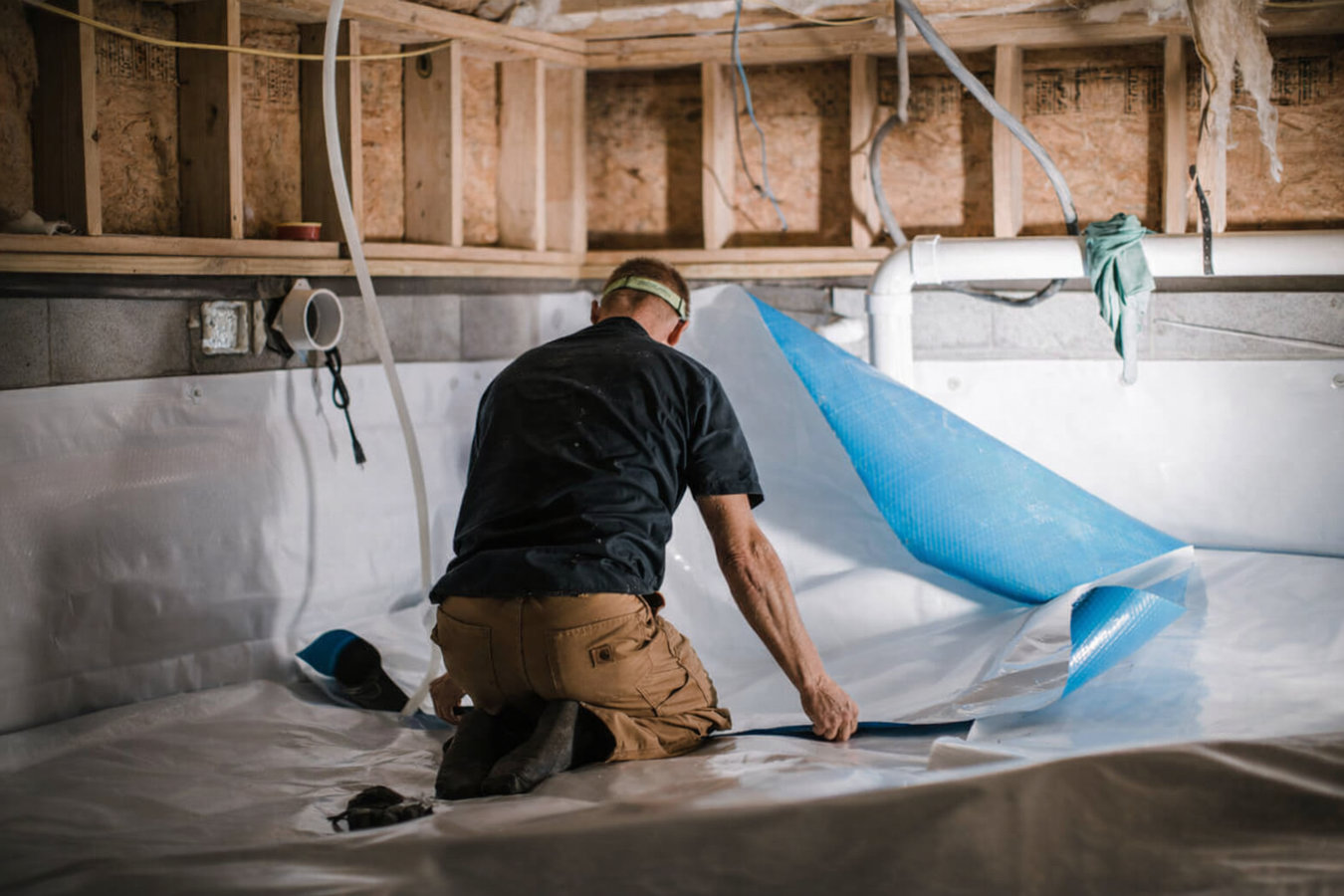
Ground moisture is working on your floor framing every wet season. A properly installed vapor barrier stops it before it causes rot, mold, or musty air inside your home.
Crawl space vapor barrier installation in Hollister covers the bare dirt floor of your crawl space with thick plastic sheeting, blocking ground moisture from rising into your floor framing and living space - most jobs are completed in a single day for a typical single-family home.
If you have noticed a musty smell in your home during winter or soft spots in your floors, ground moisture is almost certainly the source. Hollister sits on clay-heavy soils that hold water long after the rains stop, which means the crawl space under your home is exposed to real dampness every wet season. Without a barrier, that moisture works quietly on your wood framing year after year.
Many homeowners who need a crawl space vapor barrier also benefit from crawl space insulation above it - sealing the moisture source first makes any insulation upgrade far more effective.
A damp, earthy odor inside your home - especially near the floors or in rooms toward the back of the house - is almost always moisture-related. In Hollister, this smell tends to peak in January and February at the height of the wet season. It can fade in summer, which makes it easy to ignore, but moisture is still working on your framing even when you cannot smell it.
Walk slowly across your floors and notice any spots that feel softer or slightly bouncy. This can mean the wood subfloor or framing beneath it has absorbed enough moisture to begin weakening. In homes built before the 1990s - a large share of Hollister's housing stock - this kind of damage can develop quietly over many years without a vapor barrier in place.
If you regularly see moisture beading on the inside of your windows or along the base of your walls during Hollister's wet season, your home has a humidity problem. Some of that humidity is almost certainly rising from an unprotected crawl space below. A vapor barrier eliminates one of the biggest indoor moisture contributors in homes with bare dirt crawl spaces.
If you have peeked into your crawl space access hatch and seen dark fuzzy spots or a white chalky coating on the concrete walls, moisture has been active in that space. The white powder - called efflorescence - is left behind when water moves through concrete and evaporates. Either sign means a vapor barrier is overdue.
We install heavy-duty polyethylene sheeting across the full floor of your crawl space, with seams properly overlapped and taped and edges sealed against the foundation walls. There are no shortcuts: every inch of bare ground gets covered. If your crawl space has old debris or hanging insulation that needs to come out first, we handle that as part of the assessment rather than treating it as a surprise add-on.
For homes where ground moisture alone is not the full problem, vapor barrier installation as part of a broader moisture management approach may be the right next step. We assess each home on its own terms and recommend only what the space actually needs.
Suits most Hollister homes with bare dirt crawl spaces and seasonal moisture from the wet winter months. Covers the ground, seals seams, and secures edges to foundation walls.
Suits homes with persistent humidity, higher moisture levels, or crawl spaces that are used for storage. Uses thicker material rated for long-term durability and sets the space up for full encapsulation if needed later.
Suits older Hollister homes where an original thin plastic sheet has cracked, torn, or shifted over time. We remove the old material, inspect the ground and foundation walls, and install a proper replacement.
Suits homes where ground moisture and poor thermal performance are both present. We address the moisture source first, then pair it with crawl space insulation above for a complete solution.
Hollister sits in the San Benito Valley with a Mediterranean climate - hot, dry summers and wet winters that bring real rainfall between November and March. The clay-heavy soils throughout the valley absorb water slowly and hold it for a long time after rain, which means the ground under your home can stay damp well into spring even after the rains stop. A significant portion of Hollister's single-family homes were built in the 1950s through 1980s with vented crawl spaces and bare dirt floors - many have never had a vapor barrier installed, or the original thin sheeting has long since degraded.
Hollister also sits near the Calaveras Fault, so minor seismic activity here is more common than in most California cities. Small foundation shifts can disturb or tear an older vapor barrier and create new gaps where moisture enters. Homeowners across the region - including those we serve in Gilroy and Watsonville - face similar seasonal moisture patterns, and a properly secured vapor barrier is the foundation of any lasting crawl space moisture management plan.
We will ask a few basic questions - the size of your home, what you have noticed, and whether anyone has been under the house recently. We reply within 1 business day and most Hollister homeowners can get an on-site estimate scheduled within a few days.
A technician goes into the crawl space through the access hatch and checks the ground condition, measures the space, looks for existing moisture damage, and notes how accessible the area is. This typically takes 30 to 60 minutes and there is no charge. You receive a written estimate before any work is scheduled.
The crew works entirely in the crawl space - you do not need to leave your home. They lay the sheeting across the full ground surface, overlap and tape every seam, and secure the edges against the foundation walls. Most Hollister homes are finished in a single day.
Before leaving, we walk you through what was done and provide photos taken inside the crawl space showing the finished barrier. You receive written documentation of the materials used. Ask for this before we go - a contractor who resists documentation is a contractor worth walking away from.
Free estimate. Written quote before any work starts. No pressure.
(831) 271-0020We are a local contractor, not a regional franchise. We have assessed crawl spaces in Hollister neighborhoods across the city and understand what the clay soil, wet winters, and older housing stock here actually look like under the house. That familiarity means fewer surprises on job day.
You will see the thickness of the sheeting, how seams will be handled, and the full cost in writing before any crew shows up. We do not quote low to get on the calendar and adjust the number once the work is underway.
You cannot easily check the work yourself without going under the house. We document every installation with photos showing the barrier laid flat, seams taped, and edges secured - and we have those ready before we leave. You should not have to ask.
Hollister sits near the Calaveras Fault, and minor tremors can shift foundation walls and disturb older vapor barriers without any visible signs inside the house. We check the foundation perimeter during every assessment. For more on seismic conditions in this area, see the USGS Earthquake Hazards Program - we factor that local context into every quote.
Every point above is how we actually run jobs here - not a tagline. A contractor who shows you documentation of the finished work is a contractor worth trusting with the parts of your home you cannot easily see yourself.
A broader moisture management approach for homes where ground moisture is part of a larger crawl space problem.
Learn moreAdd thermal protection above the vapor barrier to address both moisture and heat loss under your floors.
Learn moreHollister's wet season starts in November - get your home protected before the ground gets wet again this year.