Home insulation
A whole-home insulation assessment covers attic, walls, and crawl space together so no area is left behind.
Learn more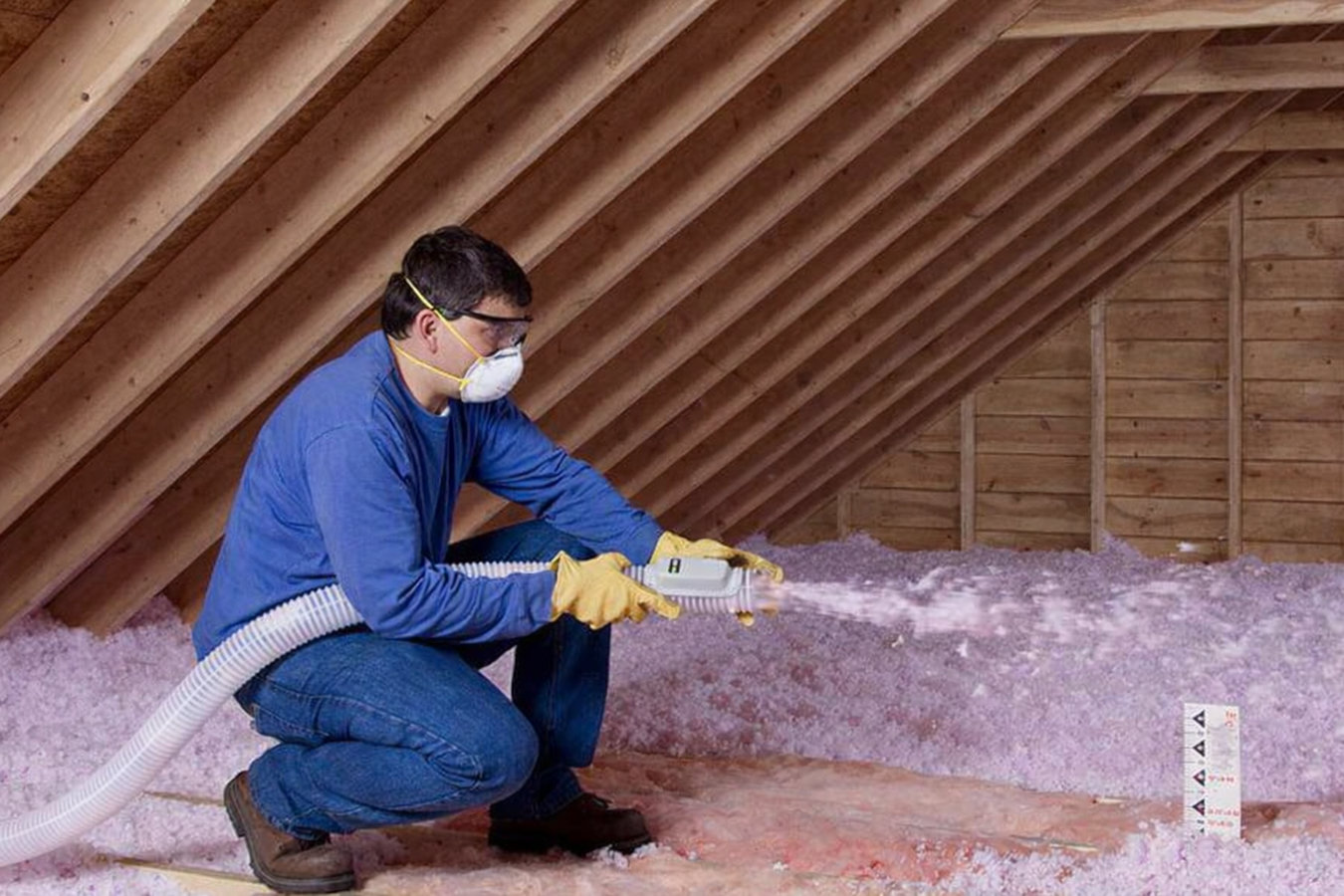
Gaps and thin spots in your attic let heat pour in all summer. Blown-in insulation fills every corner batts miss, making your home noticeably cooler without running the AC harder.
Blown-in insulation in Hollister uses cellulose or fiberglass loose fill blown through a hose into your attic or walls - most jobs are complete in two to four hours and require no drywall work. Unlike rigid batt rolls, the loose material fills corners, gaps around pipes, and odd-shaped cavities that rigid insulation simply cannot reach. If your home was built before 2000, the original material has likely settled to a fraction of what your attic actually needs. Pairing a blown-in top-off with whole-home insulation and proper air sealing gives you the most complete thermal barrier.
The biggest payoff for Hollister homeowners is in summer. An under-insulated attic can reach 150 degrees or more on a hot afternoon, which forces your air conditioner to run constantly. Blown-in insulation acts like a lid on a cooler - keeping that heat from pushing into your living space. If you also have older insulation that has compressed over the years, upgrading is one of the most direct improvements you can make for immediate, noticeable comfort.
If rooms directly under the roof feel significantly hotter than the rest of your home during Hollister summers, your attic insulation is failing to block the heat coming through the roof. This is especially common in homes built before 2000, where original insulation has thinned or settled. You should not need to crank the AC to its lowest setting just to make one room livable.
Hollister summers are long and hot, and if your electricity bill climbs sharply from June through September, your air conditioner is probably working harder than it should. A well-insulated attic acts like a lid on a cooler. If your bills have been creeping up year over year, insulation is one of the first things worth checking.
Open your attic hatch and shine a flashlight inside. If you can clearly see the wooden beams running across the floor, your insulation is too thin. A properly insulated attic has material that covers those beams completely - you should not be able to see the wood at all. This is a quick visual check anyone can do.
Many Hollister homes from the 1970s through 1990s were built with insulation levels that met the code of the time but fall well short of today's recommendations. After decades, that original material has settled and compressed. If you have never had the attic insulation topped off or replaced, it is almost certainly underperforming.
Our blown-in insulation work covers attics, wall cavities, and hard-to-reach areas throughout your home. We use both cellulose and fiberglass loose fill depending on the application - cellulose settles into tight spaces densely and is made from recycled material, while fiberglass is lighter and resists moisture well. Every job includes a full attic assessment to check depth, measure gaps, and confirm there are no moisture or pest issues before we add anything new. If you are also dealing with thin or damaged insulation elsewhere, we can combine this work with a full attic insulation service for a complete solution.
Air sealing is the step that makes blown-in insulation perform the way it is supposed to. Before any material goes in, we seal gaps around light fixtures, plumbing penetrations, and other openings in the attic floor. This prevents conditioned air from bypassing the insulation entirely through those gaps. Skipping this step is one of the most common reasons homeowners are disappointed with their results. We always recommend combining blown-in insulation with air sealing for the biggest impact on comfort and energy bills.
Best for homes with some existing insulation that needs to reach current depth recommendations.
Ideal when existing material is contaminated, heavily compressed, or pest-damaged.
Suitable for older homes where wall insulation was never installed or has deteriorated.
The most effective combination - sealing gaps first, then filling with blown-in material for complete coverage.
Hollister sits in the San Benito Valley with summer highs regularly reaching the upper 90s to 100-plus degrees. An under-insulated attic in this climate can reach extreme temperatures on a hot afternoon, forcing your air conditioner to run almost constantly. The city also has a large share of homes built in the 1960s through 1990s, when insulation standards were much lower than today. Many of these homes have only a few inches of original material in the attic - far below what is now recommended for Central California's climate zone. Homeowners near Gilroy and Salinas face similar conditions and often benefit from the same blown-in upgrade.
Hollister's location near the Calaveras Fault also means small earthquakes are part of life here. Repeated minor tremors over the years can shift attic framing, dislodge existing insulation, and open new gaps that let conditioned air escape - without you ever noticing. Before blowing in new material, we always check the attic structure and confirm that old insulation has not been displaced by ground movement. That extra step protects the quality of the finished job. PG&E serves Hollister and has historically offered rebate programs for qualifying insulation upgrades, which can reduce your project cost - check their current offerings before scheduling. For more on California's energy efficiency standards and recommended R-values, the California Energy Commission publishes current climate zone guidance.
We ask a few basic questions - your home's square footage, when it was built, and what is prompting your call. We respond within 1 business day and schedule a time to visit in person before giving any price.
We open the attic hatch, measure the existing insulation depth, and look for moisture, pests, or gaps around pipes and light fixtures. This visit takes 20 to 45 minutes and you receive a written estimate before we leave.
If air sealing is included - and it should be - we seal gaps first before any material is blown in. The blowing machine runs outside or in your garage, and a hose runs up to the attic. The actual blowing takes one to two hours for a standard attic.
We clean up around the attic hatch, walk you through what was done, and provide written documentation of the final insulation depth. This record is useful for PG&E rebate applications and future home sale disclosures.
We respond within 1 business day - no obligation to proceed after the estimate. Submit your request and someone from our office will call to schedule a free on-site assessment so you know exactly what your attic needs before any work begins.
(831) 271-0020We operate locally across San Benito County and the surrounding region. You get a contractor who knows Hollister's housing stock, understands PG&E's rebate process, and has completed jobs in neighborhoods across the city - not a regional chain sending a crew from two hours away.
Air sealing is the step that makes blown-in insulation actually work. We include it as part of our standard assessment and recommendation rather than treating it as an upsell. You get a complete job, not a partial one.
You will never receive a vague quote followed by a surprise bill. We provide a written estimate that breaks down scope, materials, and total cost before any work begins. If rebates apply, we explain them at that point - not after installation.
Living near the Calaveras Fault means your attic has likely experienced small tremors that shift insulation without visible signs. We check the attic structure and confirm no displacement before adding new material. For background on seismic risk in this region, see USGS Earthquake Hazards Program - we take that context seriously on every Hollister job.
Every one of these points comes back to the same thing: you should know what you are getting, why it matters, and what it costs before any work begins. That is how we work on every job.
A whole-home insulation assessment covers attic, walls, and crawl space together so no area is left behind.
Learn moreDedicated attic insulation service covering removal of old material, air sealing, and full reinstall where needed.
Learn moreSummer heat will not wait - schedule your free blown-in insulation estimate now and start seeing lower bills this season.